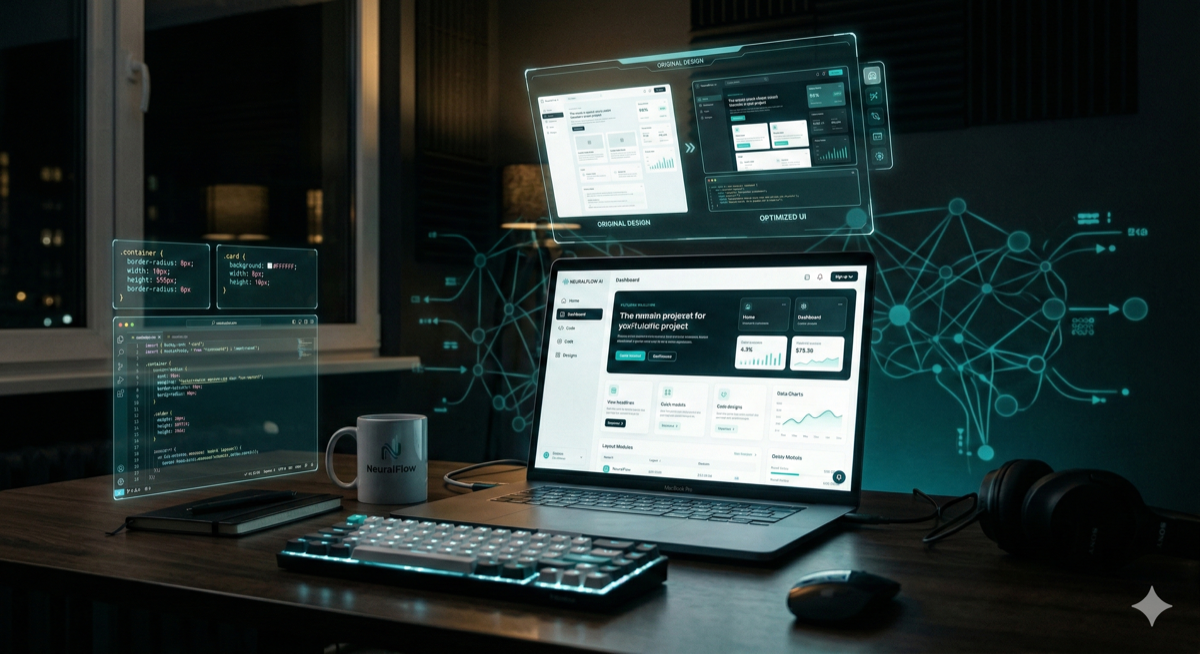
What would have taken a team of developers a week to accomplish, we did in a single afternoon — and the secret weapon was Claude Sonnet 4.6.
Today I want to walk you through exactly what we built, because I think it illustrates something important for every small business owner: AI isn't just a writing tool or a chatbot. When used correctly, it becomes a genuine technical partner that can help you ship real, production-ready work at a pace that simply wasn't possible before.
What We Actually Built Today
Starting from a functional but unstyled Flask web application, we completely overhauled the Verivec website from the ground up. Here's a snapshot of what got done:
A complete design system. We built a single consolidated stylesheet — main.css — with CSS custom properties (design tokens) for colors, spacing, shadows, and typography. Every page on the site now pulls from one source of truth. No more scattered inline styles or duplicate CSS blocks.
Every page redesigned. That's eleven templates in total — the homepage, blog, individual posts, about, services, contact, privacy, terms, login, manage categories, create post, and search results. Each one was stripped of old inline styles and rebuilt with a consistent, professional design language.
Smart new features. We added post thumbnails to the blog feed, a circular headshot that appears on both the about page and at the bottom of every article, an AI summary box for posts, a sticky frosted-glass navigation bar, and a custom 503 maintenance page for deployments.
A smarter search. The original search only scanned blog posts. We extended it to also surface static pages like About, Services, and Contact — complete with a combined result count and a clean "Pages" section in the results.
Real bugs squashed. Along the way we caught and fixed a case-sensitivity issue with the headshot filename that was breaking production on Render's Linux server, raw HTML tags leaking into blog post excerpts, an oval headshot that needed to be a perfect circle, and a duplicate Flask route that was causing deployment failures.
How Claude Made This Possible
Here's what impressed me most. At no point did I have to fully context-switch out of what I was doing. When I hit a problem — like the headshot showing locally but not in production — I described what I was seeing and Claude walked me straight to the root cause: the filename was Chris-Bannan.jpg in Git but referenced as chris-bannan.jpg in the template. On a case-insensitive Mac that's invisible. On Render's Linux server it's a broken image. That kind of cross-environment debugging used to require either deep experience or a lot of Googling.
When we wanted to add thumbnails to the blog feed, it wasn't just "here's the HTML snippet." Claude updated the CSS grid from two columns to three, added the thumbnail styles, made sure they hid cleanly on mobile, and handed me complete ready-to-paste files. Every time.
The back-and-forth felt less like querying a search engine and more like working alongside someone who already understood the codebase — because by that point in the conversation, it did.
What This Means for Your Business
I built Verivec on the belief that small businesses deserve access to the same caliber of marketing and technology that large enterprises take for granted. Today was a live demonstration of exactly that.
A polished, consistent, production-ready website with smart search, responsive design, and zero technical debt — built in an afternoon, by one person, with an AI partner. The barrier to entry for professional digital infrastructure has never been lower.
If you're a small business owner wondering whether AI tools are worth the hype, the answer is yes — but only when you know how to direct them. That's exactly what we help our clients do at Verivec.
Ready to see what a focused afternoon could do for your business? Let's talk.
